

bg_image
Posted By

InfyAdmin

One of the most common questions businesses ask before investing in SEO is: How long does SEO take to show results?

Many companies in competitive markets such as the USA, Australia, Germany, and Canada want immediate visibility on search engines. However, SEO is a long-term digital marketing strategy that requires time, consistency, and proper execution.

Unlike paid advertising, which can deliver instant traffic, SEO focuses on building sustainable organic visibility. Understanding the realistic timeline of SEO helps businesses set the right expectations and plan their marketing strategy effectively.

In this guide, we will explain how long SEO typically takes to show results and the factors that influence the speed of ranking improvements.

Understanding the SEO Timeline

SEO results do not happen overnight because search engines evaluate websites based on multiple factors such as content quality, authority, technical performance, and user experience.

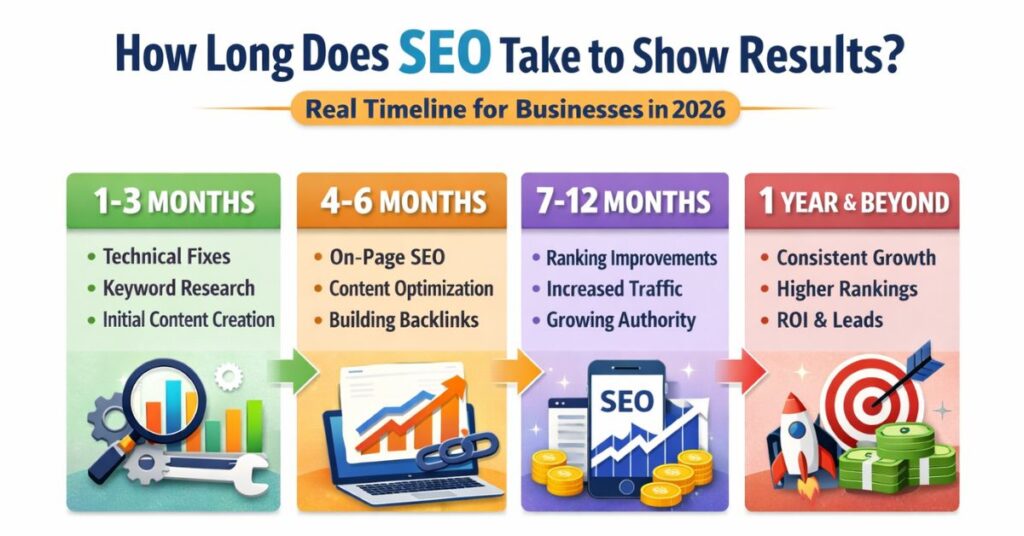
Typically, businesses begin to see measurable improvements within 3 to 6 months, while strong and consistent results often appear within 6 to 12 months.

However, the exact timeline depends on several variables including competition level, website quality, and SEO strategy.

SEO Progress Timeline (Month-by-Month Overview)

Month 1: Website Audit and Strategy Planning

The first step in any SEO campaign is a comprehensive website audit. SEO specialists analyze the website to identify technical issues, keyword opportunities, and competitor strategies.

During this stage, the focus is on:

  • Keyword research
  • Technical SEO audit
  • Competitor analysis
  • SEO strategy planning

Although there may not be visible ranking improvements yet, this step lays the foundation for future growth.

Month 2–3: Technical Optimization and On-Page SEO

After the audit, SEO experts begin implementing technical improvements and on-page optimization.

This may include:

  • Fixing website speed issues
  • Optimizing page structure
  • Improving meta tags and headings
  • Enhancing internal linking

During this phase, search engines start recognizing improvements, and some keywords may begin moving up in rankings.

Month 3–6: Content Development and Authority Building

Content and authority play a major role in SEO success. Businesses begin creating optimized content that targets relevant keywords and user intent.

Activities during this stage include:

  • Publishing blog articles
  • Optimizing service pages
  • Implementing content marketing strategies
  • Building high-quality backlinks

Many businesses start noticing increases in website traffic during this stage.

Month 6–9: Ranking Improvements and Traffic Growth

As the SEO strategy matures, rankings start improving for more competitive keywords.

During this period:

  • Organic traffic typically increases
  • More pages start ranking on search engines
  • Website authority improves

Businesses may begin receiving consistent inquiries and leads from organic search.

Month 9–12: Strong Visibility and Lead Generation

After several months of consistent SEO work, businesses often achieve strong search visibility.

At this stage, the website benefits from:

  • Higher keyword rankings
  • Increased brand authority
  • Consistent organic traffic
  • Better lead generation opportunities

SEO continues to improve over time as the website gains more authority and content.

Factors That Affect SEO Results

1. Competition Level

Highly competitive industries take longer to rank because many businesses are competing for the same keywords.

For example:

  • Competitive markets (USA, Germany): Longer SEO timeline
  • Local markets with lower competition: Faster ranking opportunities

2. Website Age and Authority

Older websites with existing authority may see results faster than brand-new websites.

New websites often require more time to build credibility with search engines.

3. Quality of SEO Strategy

A well-planned SEO strategy that includes technical optimization, quality content, and link building typically delivers faster and more stable results.

Poor SEO practices can delay progress or even harm rankings.

How Long Does SEO Take to Show Results Real Timeline for Businesses in 2026 (2)

4. Website Technical Health

Technical issues such as slow loading speed, broken links, and poor mobile experience can negatively impact SEO performance.

Fixing these issues early helps improve search engine visibility.

5. Consistency of SEO Efforts

SEO requires continuous improvement. Websites that regularly publish content, update pages, and build authority usually experience faster growth.

Inconsistent SEO efforts can slow down progress.

Why SEO Takes Time

Search engines aim to provide the best results for users. Therefore, they evaluate websites carefully before ranking them highly.

SEO takes time because it involves:

  • Building website authority
  • Creating valuable content
  • Earning backlinks
  • Improving user experience

These factors cannot be achieved instantly, but they deliver sustainable long-term results.

Benefits of Long-Term SEO Investment

Although SEO takes time, it offers significant long-term advantages compared to short-term marketing tactics.

Businesses investing in SEO benefit from:

  • Consistent organic traffic
  • Lower long-term marketing costs
  • Higher credibility and trust
  • Sustainable lead generation
  • Strong competitive advantage

Over time, SEO becomes one of the most cost-effective digital marketing strategies.

When Should Businesses Start SEO?

The best time to start SEO is as early as possible.

Businesses launching a new website should implement SEO from the beginning, while companies with existing websites should start optimizing immediately to stay competitive.

Waiting too long can allow competitors to dominate search results.

Frequently Asked Questions (FAQs)

1. Can SEO show results within one month?

SEO rarely produces significant results within one month because search engines require time to evaluate website improvements. While minor ranking changes may occur early, meaningful traffic growth usually appears after several months of consistent optimization.

2. Why does SEO take longer in competitive industries?

Competitive industries have many established websites with strong authority and extensive content. Ranking against these competitors requires building similar authority, publishing high-quality content, and earning backlinks, which takes time.

3. Does website age affect SEO performance?

Yes. Older websites often have stronger authority because they have existed longer, accumulated backlinks, and built trust with search engines. However, new websites can still rank well with the right SEO strategy.

4. Can SEO results last long-term?

Yes. One of the biggest advantages of SEO is its long-term impact. Once a website ranks well, it can continue generating traffic and leads for an extended period, especially if the SEO strategy remains active.

5. Is SEO worth the investment for small businesses?

Absolutely. SEO helps small businesses compete with larger companies by increasing visibility in search results. A well-optimized website can attract targeted customers and generate consistent inquiries without relying entirely on paid advertising.

Conclusion

SEO is a powerful long-term strategy that helps businesses achieve sustainable online growth. While results may take several months, the long-term benefits far outweigh the initial waiting period.

Businesses targeting competitive markets such as the USA, Australia, Germany, and Canada should focus on consistent SEO strategies that build authority, improve user experience, and attract qualified traffic.

With the right approach and expert guidance, SEO can become one of the most valuable sources of leads and revenue for your business.

Get Started Today

Let’s build something users love!

Related Posts

No more posts to show