
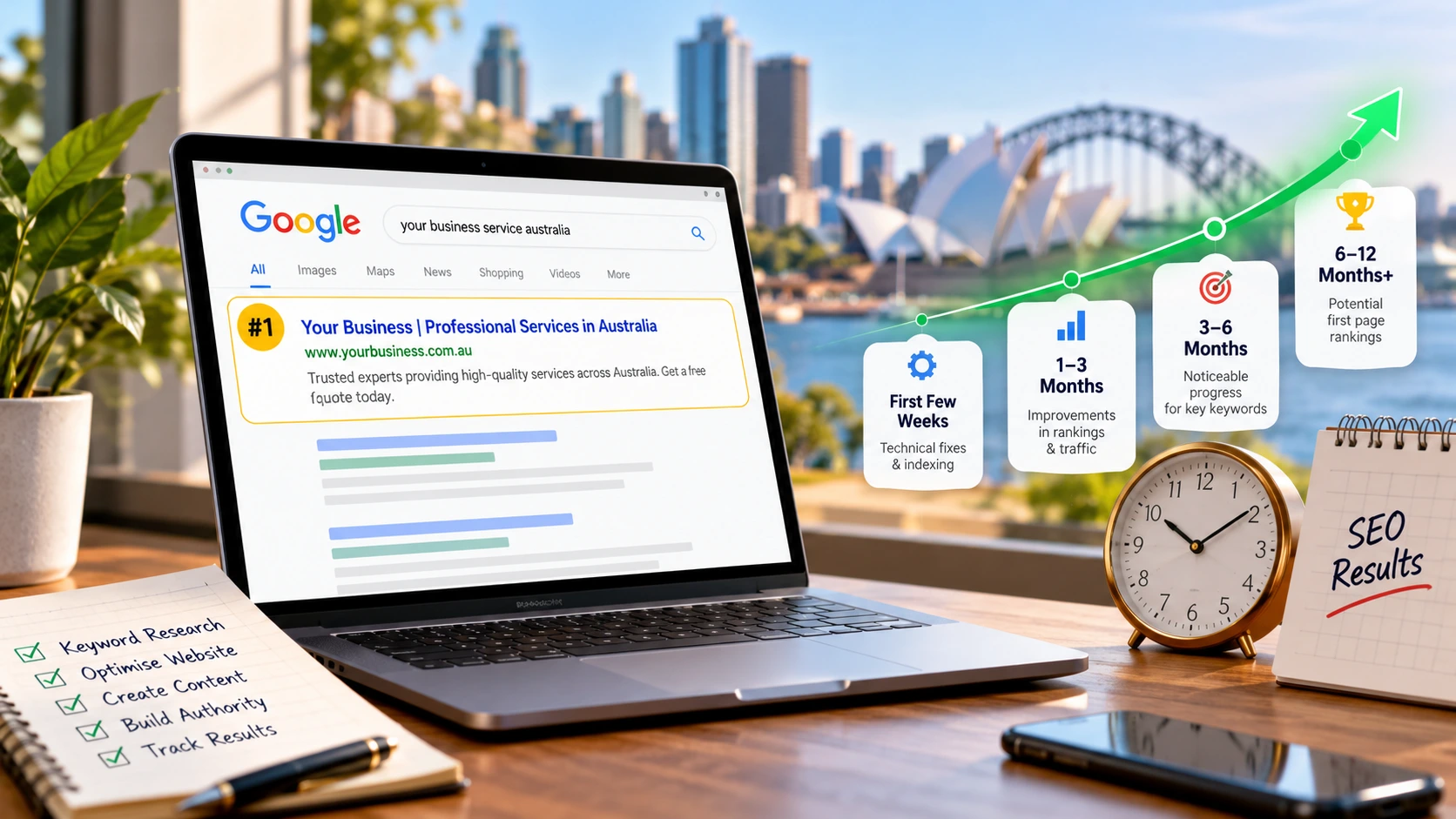
AI-powered search is changing how people discover businesses online. Alongside Google Search, users are turning to ChatGPT, Google AI Overviews and other AI search tools to find information, compare services and make decisions.

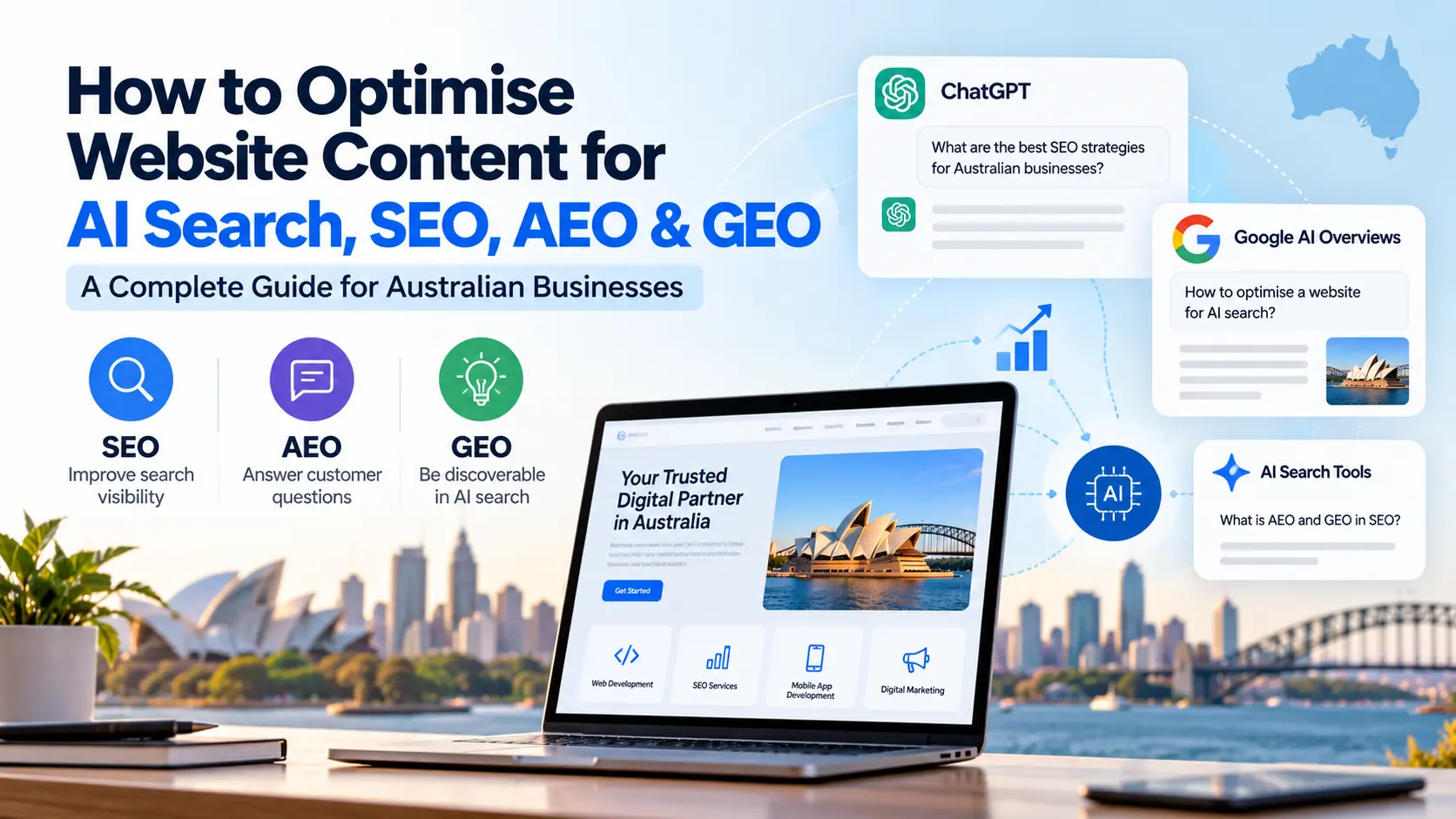
For Australian businesses, AI search optimisation is becoming an important consideration alongside traditional Search Engine Optimisation (SEO). By combining SEO, Answer Engine Optimisation (AEO) and Generative Engine Optimisation (GEO), businesses can improve their website content and build a stronger foundation for online visibility.

But how do you optimise website content for AI search? Here are five practical strategies to help your business get started.

What Are SEO, AEO and GEO?

Understanding the difference between these approaches helps you build an effective SEO and AI search optimisation strategy.

  • Search Engine Optimisation (SEO): Improves a website’s visibility in organic search results through keyword research, technical SEO, content optimisation and internal linking.
  • Answer Engine Optimisation (AEO): Focuses on creating clear, direct answers to questions users ask through search engines and answer tools.
  • Generative Engine Optimisation (GEO): Focuses on making website information useful, accurate and understandable for generative AI search experiences.

For example, an Australian business can use SEO to optimise a service page, AEO to answer common customer questions, and GEO principles to create detailed content that may be useful in AI-generated answers.

5 Ways to Optimise Website Content for AI Search

1. Target Relevant Keywords and Search Intent

Effective SEO for AI search starts with understanding what your target audience wants to know.

Research relevant keywords, including long-tail keywords and question-based searches. For Australian businesses, these might include:

  • AI search optimisation Australia
  • SEO services for Australian businesses
  • How to optimise a website for ChatGPT
  • Google AI Overviews optimisation
  • Answer Engine Optimisation (AEO) services

Use your primary keyword naturally in the page title, H1 heading, introduction and relevant subheadings. Include secondary keywords where they fit the topic instead of repeating them unnecessarily.

Most importantly, match the content to search intent. Someone looking for SEO services needs different information from someone learning what GEO means.

2. Create Helpful Content for AEO and GEO

To improve Answer Engine Optimisation and Generative Engine Optimisation, create content that answers real customer questions clearly.

Use descriptive headings, short paragraphs, bullet points, and practical examples. Start relevant sections with a direct answer, then explain the details.

For example, a question such as “How can I improve my website’s AI search visibility?” could be answered by explaining the importance of helpful content, technical SEO, internal linking, and accurate business information.

Avoid generic articles that repeat existing information without adding value. Original insights, genuine experience, and reliable sources can make your content more useful to readers.

3. Strengthen Technical SEO

Technical SEO for AI search begins with ensuring that important website pages are accessible and eligible to appear in search.

Review the following:

  • Crawling and indexing: Check important pages in Google Search Console.
  • Internal linking: Connect related blog posts and service pages.
  • Mobile usability: Ensure your website works well across devices.
  • Page performance: Improve loading speed and usability.
  • Structured data: Use relevant schema markup that accurately reflects the page content.

Google confirms that established SEO fundamentals remain important for Google AI Overviews and AI Mode. There is no special AI schema markup that guarantees inclusion in AI-generated answers.

4. Improve Local SEO for Australian Businesses

For businesses serving specific Australian cities or regions, local SEO can help connect relevant services with nearby customers.

Keep your Google Business Profile accurate where eligible, maintain consistent business details, and create useful location-specific content.

For example, an SEO agency targeting Melbourne businesses should explain its relevant services and customer benefits rather than simply repeating “SEO services Melbourne” throughout the website.

Use Australian English and include locally relevant information where appropriate. Avoid creating multiple nearly identical location pages with little unique value.

5. Measure SEO and AI Search Performance

An effective SEO, AEO and GEO strategy should be measured against meaningful business outcomes.

Use Google Search Console to monitor organic clicks, impressions and search queries. Google Analytics can help you understand website engagement, referral traffic and conversions.

You can also review relevant queries in AI search tools to check whether your business or website appears as a source. These checks provide only a snapshot, as AI-generated answers can vary.

Track qualified enquiries, leads and conversions alongside rankings and traffic. This helps you understand whether your optimisation efforts are attracting potential customers.

Common AI Search Optimisation Mistakes to Avoid

When implementing AI search optimisation, avoid these common mistakes:

  • Repeating keywords unnaturally throughout your content.
  • Publishing generic AI-generated articles without meaningful review.
  • Ignoring technical SEO and indexing issues.
  • Adding irrelevant schema markup in the hope of gaining AI visibility.
  • Expecting guaranteed mentions in ChatGPT or Google AI Overviews.

Focus on useful content, accurate information and established SEO practices rather than shortcuts.

Frequently Asked Questions

1. How do I optimise my website for ChatGPT?

Publish helpful, accurate content, answer customer questions clearly and ensure important pages are accessible. These practices can support discoverability but cannot guarantee ChatGPT citations.

2. What is the difference between AEO and GEO?

AEO focuses on answering users’ questions directly, while GEO focuses on making information useful and understandable within generative AI experiences.

3. Does SEO still matter for AI search?

Yes. Technical accessibility, helpful content, internal linking and other SEO fundamentals remain important, particularly for Google’s AI Search features.

4. Can Australian businesses appear in Google AI Overviews?

Yes, eligible pages from Australian businesses may appear in Google AI Overviews, but inclusion depends on Google’s systems and the individual search query.

Conclusion

Optimising website content for AI search requires more than adding a few AI-related keywords. Australian businesses need a strong SEO foundation, helpful content, clear answers and accurate local information.

By combining SEO, AEO and GEO, your business can build a more effective content strategy for traditional search engines and emerging AI-powered search experiences.

If you need help improving organic visibility, technical SEO or content performance, explore InfyApp Development’s SEO services

Related Posts