A startup idea can look perfect on paper, but that doesn’t mean it will work as a real product.

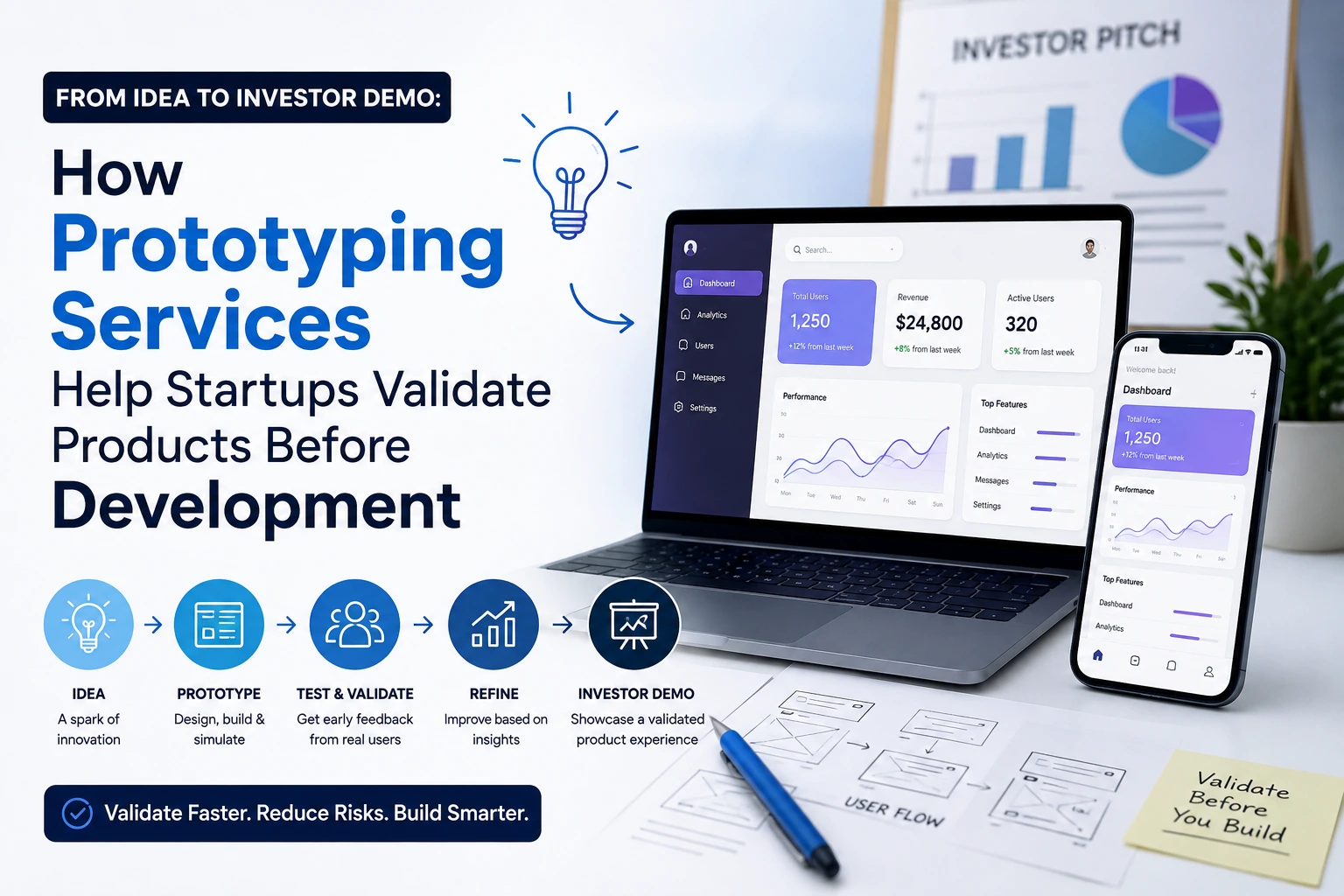
Before investing heavily in development, startups need to understand whether users can understand the product, navigate it easily, and see its value. This is where prototyping becomes important.

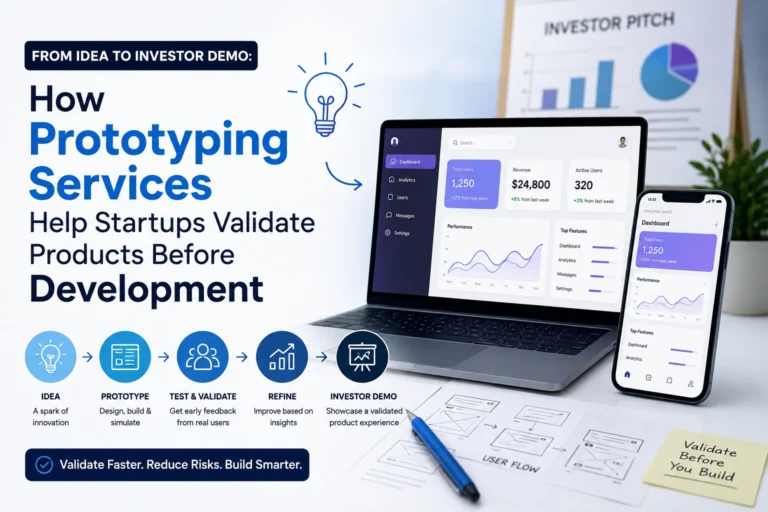
A prototype gives founders a working visual representation of their product idea that can be tested, demonstrated, and improved before full development begins. With a professional Prototyping Services Agency India, startups can turn an early concept into a realistic product experience while reducing unnecessary development risks.

Quick Summary

Product prototyping helps startups test, demonstrate, and improve their ideas before investing heavily in development. A well-designed prototype can validate user flows, reveal usability issues, collect early feedback, support investor presentations, and reduce development risks. This guide explains how prototyping works, what to include, how it differs from an MVP, common mistakes to avoid, and how professional prototyping services can help turn an idea into a clear, testable product experience.

What Is Product Prototyping?

Product prototyping is the process of creating an interactive model of a website, mobile app, or digital product before the final product is developed.

A prototype can demonstrate:

  • Screen layouts
  • Navigation
  • User flows
  • Buttons and interactions
  • Product features
  • User experience

Unlike a static design, an interactive prototype allows stakeholders and potential users to experience how the product is expected to work.

For startups, this makes it easier to identify problems before they become expensive development changes.

Why Should Startups Build a Prototype Before Development?

Moving directly from an idea to development can be risky.

You may discover later that users don’t understand the product, an important feature is missing, or the user journey requires too many steps.

A prototype allows startups to test these assumptions earlier.

Reduce Development Risk

Changing a prototype is generally easier than changing a product that has already been developed.

Startups can identify issues with navigation, functionality, and user experience before developers spend significant time building them.

Make the Idea Easier to Understand

Explaining an app idea through words or presentations isn’t always enough.

A prototype allows founders to show investors, stakeholders, and potential customers how the product will actually work.

Get Early User Feedback

A prototype can be shared with potential users to understand:

  • What they like
  • Where they get confused
  • Which features they find useful
  • What could be improved

This feedback can help startups refine the product before development.

How Prototyping Helps With Investor Presentations

Investors want to understand more than just the business idea.

They want to see how the product solves a problem and what the user experience will look like.

A prototype can make your pitch more tangible.

For example, instead of explaining:

“Our platform will help businesses manage their customers more efficiently.”

You can demonstrate:

Login → Dashboard → Customer Management → Reports → Actions

This gives investors a clearer understanding of the product and its potential.

A Prototype Can Help Demonstrate:
  • The core product idea
  • Main features
  • User journey
  • Unique functionality
  • Customer experience
  • Future product direction

A good investor demo doesn’t need to show every feature.

It should focus on the core experience that makes the product valuable.

Prototype vs MVP: What's the Difference?

Startups often confuse prototypes with MVPs, but they serve different purposes.

Prototype MVP
Used to test an idea Used to test a working product
Focuses on user experience Includes functional features
Usually created before development Requires actual development
Easier to change Changes can require development work
Useful for demonstrations Can be released to real users

A prototype helps answer:

“Does this product idea and experience make sense?”

An MVP helps answer:

“Will people actually use and pay for this product?”

What Should a Startup Include in a Prototype?

You don’t need to prototype every possible feature.

Start with the most important user journey.

For example:

E-commerce App:
Search → Product → Cart → Checkout

Booking App:
Search → Select → Booking → Confirmation

AI Application:
Input → AI Response → Result → User Action

The goal is to demonstrate the product’s core value without making the prototype unnecessarily complicated.

How Prototyping Services Help Startups

Working with a professional Prototyping Services Agency India can help startups move from a rough idea to a structured and testable product experience.

1. Understand the Product Idea

The process starts by understanding the business goals, target audience, product requirements, and problem being solved.

2. Define the User Flow

The team determines how users will move through the product and what actions are most important.

3. Create the Prototype

Key screens and interactions are connected to create a realistic product flow.

4. Review and Improve

The prototype can be reviewed by founders, stakeholders, potential customers, or investors.

Feedback can then be used to improve the experience.

5. Prepare for Development

Once the prototype is finalized, it can provide a clear reference for UI design and development.

This can reduce confusion between business owners, designers, and developers.

Prototyping Services Agency India

Common Prototyping Mistakes Startups Should Avoid

Building Too Many Features

A prototype should focus on the core product idea rather than trying to demonstrate everything.

Ignoring User Feedback

A prototype is most valuable when real people interact with it. Don’t rely only on internal opinions.

Focusing Only on Visual Design

A prototype should demonstrate how the product works, not just how attractive it looks.

Treating the Prototype as the Final Product

A prototype is a validation tool. It doesn’t need to contain the complete technology or functionality of the final application.

Building Before Understanding the Problem

Even the best prototype cannot fix a product that doesn’t solve a genuine customer problem.

When Should You Build a Prototype?

A typical startup product development process can look like:

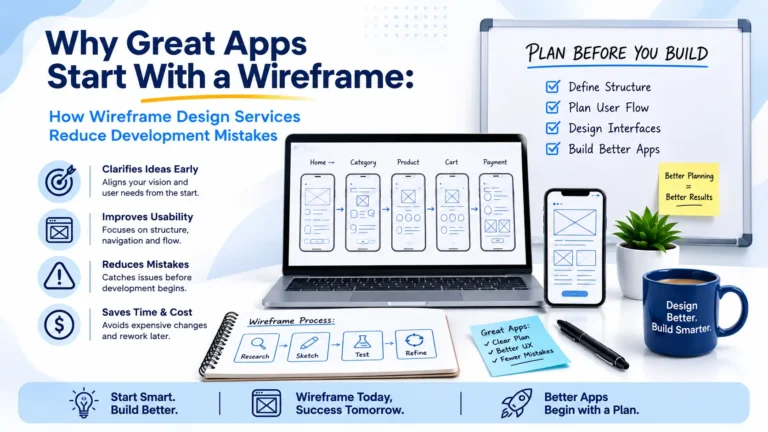
Idea → Research → User Flow → Wireframe → Prototype → Testing → UI Design → Development → MVP

The process may change depending on the product, but the important point is to validate important decisions before committing significant development resources.

What Makes a Good Product Prototype?

A good prototype should make the product easy to understand and demonstrate the most important user journey.

It should have:

  • Clear navigation
  • Realistic user flows
  • Important core features
  • Consistent interactions
  • A clear product purpose
  • Enough detail for meaningful feedback

The prototype doesn’t need to be perfect.

It needs to be useful enough to test the idea and identify what should change.

Conclusion

A prototype gives startups an opportunity to test their product idea before investing heavily in development. It can help identify usability problems, improve user journeys, collect early feedback, and make the product easier to demonstrate to investors and stakeholders.

With the right Prototyping Services Agency India, startups can turn an initial concept into a clear and testable product experience. Instead of building first and discovering problems later, prototyping helps teams make better decisions earlier and create a stronger foundation for development.

Frequently Asked Questions (FAQs)

1. What is product prototyping?

Product prototyping is the process of creating an interactive model of a digital product before full development. It helps demonstrate the product's structure, features, and user experience.

2. Why is prototyping important for startups?

Prototyping helps startups test their product concept, identify usability issues, collect feedback, and refine the user experience before investing heavily in development.

3. Can a prototype help attract investors?

Yes. A prototype can make a product idea easier for investors to understand by demonstrating the actual user journey and core functionality instead of relying only on a pitch deck.

4. Is a prototype the same as an MVP?

No. A prototype is mainly used to test and demonstrate a product concept, while an MVP is a functional version of the product that can be released to real users.

5. How long does it take to create a prototype?

The timeline depends on the product's complexity, number of screens, features, and level of interaction required. A prototype focused on one core user journey can generally be completed faster than one covering an entire application.

6. Can a prototype be changed before development?

Yes. One of the main advantages of prototyping is that changes can be made before the product enters full development, making it easier to refine the user experience and product structure.

Get Started Today

Let’s build something users love!

Related Posts

No more posts to show

Related Posts